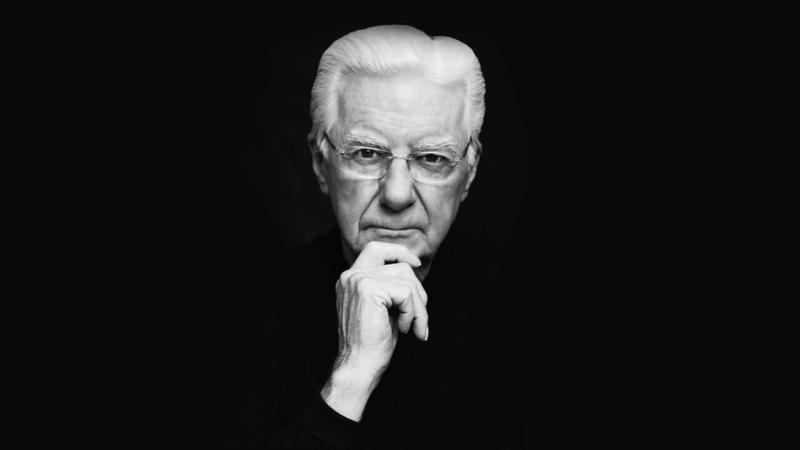


Learn English with Dua Lipa. In this 2026 speech at the International Booker Prize 10th anniversary event in London, the singer, author and book lover reflects on translated fiction, identity, and the power of stories to connect people across cultures. Her message celebrates reading, language, and the voices that help us understand one another.
Who This Speech Is For
- Learners interested in books, culture, language, and personal storytelling.
- Those who want to discuss reading, identity, prisons, book clubs, and global literature.
- Intermediate to advanced learners studying clear, reflective British English.
How This Speech Helps Your English
- Learn vocabulary about fiction, translation, reading, identity, and human connection.
- Notice how personal examples make an abstract topic easy to understand.
- Study phrases for explaining opinions, memories, and emotional reactions.
- Hear how pauses, contrast, and lists can make a speech feel warm and organized.
Why This Speech Matters
- Celebrates translated fiction as a way to understand other people and cultures.
- Shows how reading can create conversation, empathy, and personal change.
- Connects literature with real lives, including readers inside prisons and young offender institutions.
Download available
for Plus Members
PDF Transcript
Access the full speech in an
easy-to-read PDF format.
Audio Version
Listen and download clear,
high-quality MP3 recordings.
English Lesson
Includes vocabulary
and grammar practice.
Offer ends in:
Offer ended.
Transcript
While I’ve always felt firmly rooted, my life has never really been what you might call local. I was born in the UK, but my first language was Albanian. London is my home, but I’m often on the road, and today I have the privilege of traveling the world doing a job that I love. Last year, I played live in 33 cities in 20 countries and sang in nine different languages. It turns out my reading habits follow a similar pattern.
Since we launched the Service95 Book Club three years ago, eight of my 33 monthly reads have been translated fiction. Just as importantly, these 33 books tell stories that span Japan, Korea, Nigeria, Colombia, the US, Mexico, Hungary, Norway, Afghanistan, Poland, Ireland, Spain, the UK, France, Vietnam, and Australia.
I read as much as time allows, and while some of the books I love become book club titles, others remain private passions. I’m a reader who loves to be immersed in a novel, and I mean really deeply in it.
When I read translated fiction, and some of you will recognize these scenes, I walk the streets of Naples in the shoes of a young girl who’s becoming aware that her future will be defined by her gender. I’ve borne witness to animals taking revenge on their hunters in rural Poland, or did they? I’ve gained wisdom I didn’t know I needed from a pigeon on a balcony in Mexico City, and as Guadalupe Nettel writes, “You can’t get anything past a pigeon.”
I’ve overheard a conversation between French rescue responders who decided not to send help to 30 drowning asylum seekers who believed they would find sanctuary on British soil. I felt the pain of a particularly lonely love in Czechoslovakia. I’ve suffered heartbreak in 1960s Tokyo. I’ve even seen my life flash before my eyes as I faced a firing squad in Colombia.
Just this year, I’ve met sworn virgins in Albania. I thought I knew everything about Albania. But it took a Bulgarian writer, a Bulgarian translator, a small British independent publisher, and an international prize for me to find this story.
There really isn’t anything quite like a book to understand the perspective of others, and translated fiction takes that even further. I guess it’s the fusion of an experience that’s so universal and, at the same time, so unique. It’s the antidote to othering.
When I launched my book club, it wasn’t in a cozy cafe in London. It was with a reading group in Downview Women’s Prison. I was there with Gabby as part of the Books Unlocked program. Each year, the Booker Prize Foundation provides free Booker-nominated books to UK prisons and young offender institutions, and that also includes titles from the international list.
One of the most insightful conversations about a book I’ve ever had was that morning in Downview, and I’ll never forget what one of the women shared with the group: that perhaps if she’d read more books when she was younger, maybe she wouldn’t be here now.
That moment really brought it home to me that reading a book is often so much more than a solitary activity. It can trigger a conversation with a friend or, like in Downview, provide a way to share a profound experience with a wider group. And a book club discussion is maybe the one occasion where you get even more out of it if you disagree.
Last year’s winner of the International Booker Prize was Heart Lamp, written by Banu Mushtaq and translated by Deepa Bhasthi. We’ll have the pleasure of hearing from Deepa shortly. In her acceptance speech, Banu said, “This book was born from the belief that no story is ever small, that in the tapestry of human experience, every thread holds the weight of the whole.”
As a reader, I want to follow those threads of connection. What a joy it is to read. What a joy to read the world. Thank you to the International Booker Prize for giving us this gift.